

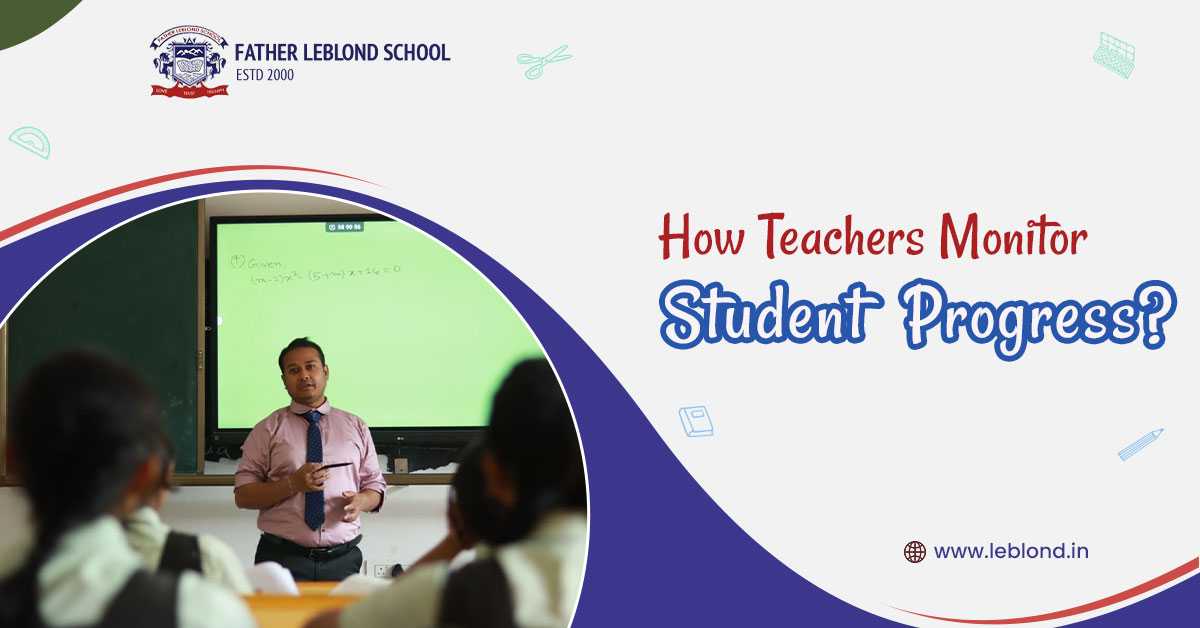

Teachers are only second to parents when it comes to nurturing a young student’s life. They play a crucial role in your child’s growth and development. Teachers not only teach what is in the book, but they also make sure that the students can learn efficiently. Neither every student is the same, nor are their learning skills, which is why it becomes crucial to monitor what they learn.
You can visit the top ICSE school in Siliguri to ensure an inclusive learning environment. Every students learn at a different speed, facing many challenges along the way. Teachers monitor their progress by using various tools and techniques. They observe students through classroom activities and try to evaluate every point about their performance.
Let’s Understand Why Students’ Progress Monitoring Matters
The goal of monitoring the progress of students is to see whether they are benefiting from the learning sessions given and to devise more effective support for those who are failing. Here is why it matters:
- Timely Assistance: Teachers can detect different learning difficulties among students at an early stage. They can understand and design more supportive learning programs to help them with their learning gap to ensure academic growth.
- Knowledge-based Teaching: It is seen that student monitoring progress helps teachers to modify and adjust their instruction based on individual students’ growth trajectories. Teachers incorporate weekly data for effective changes required to improve students' outcomes.
- Self-awareness: Progress monitoring helps students understand their own abilities. This contributes to developing resilience and goal-setting skills for lifelong learning. Students become aware of their learning and the skills they are developing through progress monitoring.
- Transparency: Through observation at every stage of learning, both students and parents can witness the students' growth and effort. This fosters parents’ engagement and offers concrete evidence of students’ progress and learning difficulties.
- Student Encouragement: An extensive study found that when students participate in monitoring and assessing their own progress, they develop a strong sense of self-regulation skills and motivation. This makes their learning more effective and engaging.
Know What Steps Teachers Follow to Monitor Students' Progress
To strengthen the foundation of lifelong survival skills, progress monitoring of students becomes inevitable. In this, teachers play a vital role by using various techniques and strategies to evaluate students’ growth. Teachers contribute to a comprehensive learning of students by addressing the challenges they come across, with timely intervention. This not only helps students improve their academic performance but also builds behavioural skills and active listening for their growth.
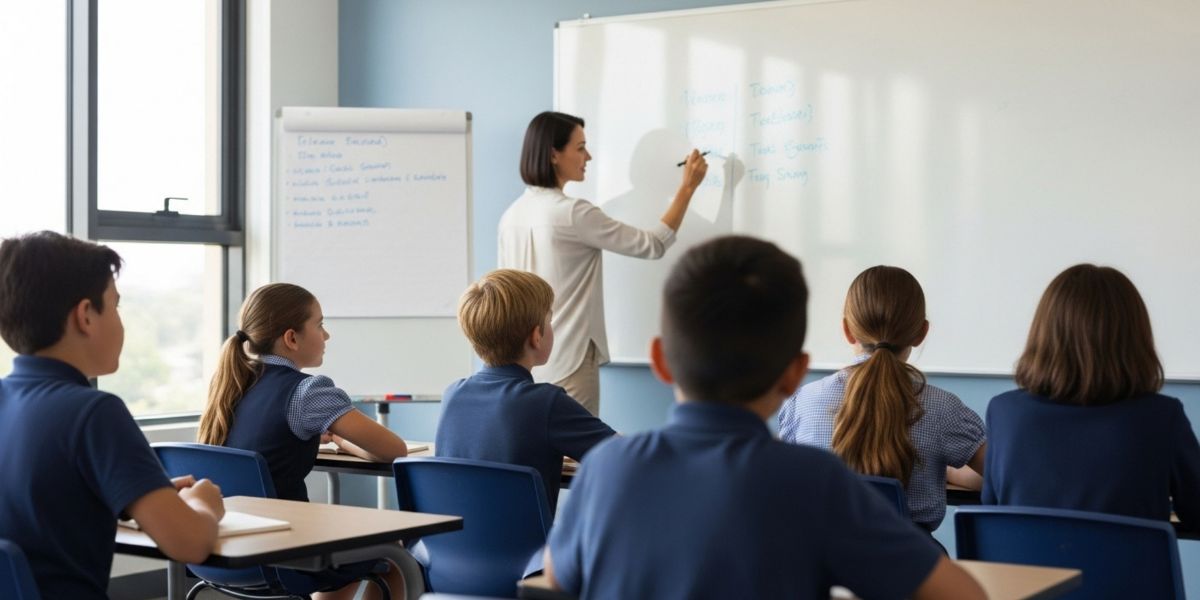
Here are the steps teachers use to monitor the students' progress :
- Assessment: One of the most effective techniques teachers follow is assessment. They assess students’ learning abilities with different forms such as written essays, quizzes, presentations and class discussion. This not only helps monitor the proficiency and learning of students about the current lesson, but also tracks how effectively they are learning. Teachers evaluate the collected data and identify the areas where students falter and those where students excel.
- Utilise Consistent Tools: Teachers monitor students' progress through combining quick quizzes or polls, rubric-based evaluation, visual progress charts and online dashboards to check results. With the use of AI, teachers incorporate various AI-based tools to measure the students’ concepts, track skill-specific growth, and collect data on their growth. By using these simple and consistent progress monitoring tools, teachers aim to track the progress visible, keep cumulative performance data and encourage awareness.
- Entrance and Exit Tickets: This is another quick technique that teachers incorporate to track students' learning. It includes an informal assessment given at the end of a lesson to measure students' understanding. Teachers can ask students to write what they already know about a certain topic at the beginning of a lesson on the same topic. At the end of the lesson, students are asked to write what they learnt. Teachers utilise this technique to gauge the comprehension, identify learning gaps and encourage prompt reflections to address students' concerns privately so that they don’t feel pressured in a group setting.
- Constant Observation: Teachers observe students' expressions, postures and behaviour when delivering their lesson. It is effective in identifying if students are confused or distracted. They use simple eye contact and pay attention to the students who are not attentive to the lesson. They pause and check in with them to address their confusion and difficulties in understanding. Regular engagement in observing students helps teachers collect data to make better adjustments to the lesson and instruction.
- Include Student Reflection: By making students involved in reflecting on their learning, teachers help them become more aware of their performance. They include short interactive activities to help them internalise their own progress, such as asking what they learnt better than last week, what they found difficult and what they want to learn next time. These types of questions provide students with the opportunity for critical thinking and self-assessment, and identify the areas where they need additional support.
- Questioning and Revision: To track what information students have retained from previous learning, teachers ask frequent questions. Often, students are asked to do board work on math, grammar and spelling, which helps teachers to understand their grasp on the areas. With effective revision of the lessons, teachers examine their concepts and knowledge of the learned lessons. This allows teachers to identify the challenges and learning trajectories of students and readjust the lessons and instructions. By questioning, teachers help students to reinforce important concepts and catch misunderstandings before they become major issues.
Final Words
Learning should be fun and interactive, not a pressure for the child to grow independently. Teachers inculcate various effective techniques and strategies to ensure optimal improvement of the young students. By organizing learning programmes, interesting activities through quizzes, puzzles and competitions, teachers monitor the progress among students. It crucially contributes to a student’s academic performance and lifelong skills. You can consider the top ICSE school in Siliguri to help your child grow efficiently.
