
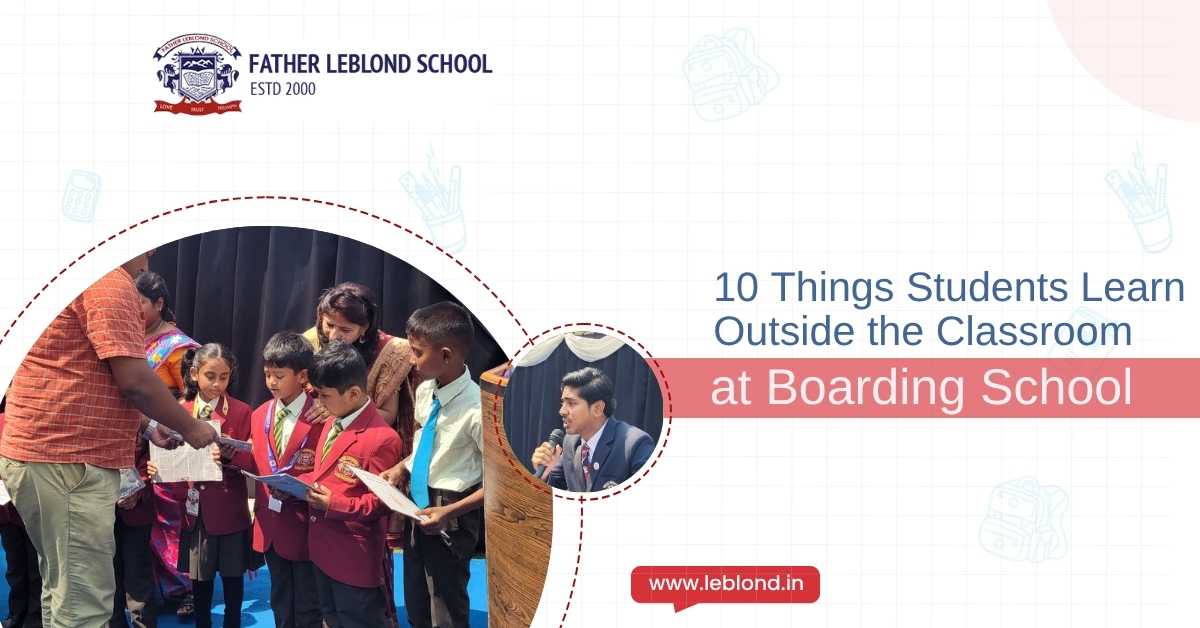

Boarding school life introduces students to a host of experiences that they would not otherwise encounter. While lessons, examinations, and extracurricular activities are important, residential life exposes them to non-obvious encounters that teach them important lessons.
Students learn patience, observation, and adaptability; how to read a room, accept consequences, distinguish between being a follower and a leader, understand the power of silence, and much more. These lessons are often embedded in seemingly mundane circumstances.
1. Reading the mood of a room before speaking:
They come to learn the power of words based on context and the importance of reading the mood of a room before speaking. The same joke told when someone is having a bad day can be received as a sarcastic remark.
Living with strangers teaches students to develop emotional intelligence and observe the facial expressions and mood of the group before saying or doing something that could upset people. They learn to identify the importance of timing and good manners.
2. Finding solutions when nobody is available to decide for them:
Students often face challenges that seem unsolved because a decision must be made. For instance, a student might find their study space taken over, their belongings moved from their usual places, or their planned activities disrupted by others.
Instead of relying on the assumption that somebody will solve the problem, students learn to look for available options and make the best choice. They learn to find solutions without demanding perfect conditions.
3. Recognising that staying quiet does not necessarily indicate consent or approval:
While some students are outspoken and vocal about their views, many prefer being silent in group settings. During their time at boarding school, students come across individuals in their friend group and class who have vastly different perspectives. In addition, they interact with individuals who are reluctant to say anything overly negative to get what they want.
Students therefore learn the importance of listening to what is not being said and respecting the views of others even if they disagree. They learn to create space for people who prefer to keep their opinions to themselves instead of labelling everything as unacceptable.
4. Learning the art of starting over after a bad day:
A failed examination, argument with a roommate, or a loss in a competition could leave individuals feeling frustrated, but living in a boarding school requires that they quickly move on.
There are always responsibilities to be fulfilled and friendships to be nurtured. They learn to detach themselves emotionally from unpleasant experiences and move forward, rather than allowing a difficult moment to shape the rest of their day or influence their future.
Students learn to make peace with disappointments and setbacks.
5. Discovering that being useful can matter more than being popular:
The school setting exposes students to individuals who can be talented, charismatic, well-connected or popular. However, they learn to identify those who bring value to their lives, as well as the role of a good companion who is dependable, considerate and willing to help.
However, they learn to identify those who bring value to their lives, as well as the role of a good companion who is dependable, considerate, and willing to help.
The experience teaches them the importance of being supportive and inclusive instead of seeking to associate exclusively with individuals who have desirable social qualities. They learn that being useful can often be more rewarding than being popular.
6. Recognising the hidden cost of small habits:
Students learn the importance of responsibility and courtesy through the negative impact of bad behaviour. Small habits such as leaving personal items scattered in the house, borrowing without asking, and arriving late to meals and events can affect many people in the long run. They learn to be conscious of their actions and avoid developing undesirable behaviours because of individual convenience.
7. Accepting that different people remember the same event differently:
Roommates and friends may interpret the same disagreements differently and have varying ideas about who is in the wrong and who should apologise. Students learn that the meaning of an action or statement is not always obvious and that different people could interpret it in widely differing ways. The context is also important.
They learn to ask clarifying questions and listen to the perspectives of others before jumping to conclusions. This enables them to handle conflicts constructively, reduce the chances of miscommunication, and resolve misunderstandings with greater ease.
8. Learning to protect their attention:
Living in boarding school with a variety of personalities exposes students to countless opinions, requests, invitations, and conversations. They learn what it means to be busy and the importance of protecting their attention. Many students are often surprised by how little time they have to pursue their personal interests because they have agreed to assist friends or take on additional responsibilities.
Students learn to make conscious decisions about what they will allow to occupy their time and attention.
9. Understanding that independence includes asking questions:
Students are often taught to rely on themselves at a young age and assume that asking for help is a sign of weakness. Living away from home for school can be an eye-opening experience, helping students understand how to ask meaningful questions, recognise when they need support, and identify the right people to approach for guidance.
They come to understand that being responsible and independent means recognising when assistance is needed and seeking support confidently, rather than overlooking problems out of fear of appearing weak.
10. Realising that small acts can change someone’s entire day:
Someone who appears happy could be going through a tough time at home or facing a difficult situation at school. Students learn that a small change of heart and an act of kindness can brighten someone’s day. The experience teaches them to be more socially aware and conscious of the impact of their behaviour.
They learn to acknowledge the needs of others and how they can offer support without being asked. A phone call, including a friend in an activity, or a conversation in the evening can be highly therapeutic.
Final thoughts
Boarding school life offers students countless opportunities to grow beyond academic learning and discover skills that become essential throughout adulthood. From understanding unspoken emotions and resolving everyday challenges to protecting their attention and appreciating the importance of small acts of kindness, these experiences teach lessons that cannot always be gained from textbooks.
Living alongside different personalities also helps students develop self- awareness, patience, adaptability, and a deeper understanding of human behaviour. Although many of these lessons emerge from ordinary moments in the dormitory, shared spaces and everyday interactions, their influence can last a lifetime.
Ultimately, the true value of boarding school life lies not only in what students achieve academically but also in the thoughtful, independent, and responsible individuals they become. Choose Father LeBlond School to help your child build confidence, develop a responsible mindset, and prepare for a brighter future.
FAQS:
1. What do students learn outside the classroom at boarding school?
Students learn practical life skills such as independent decision-making, emotional awareness, conflict resolution, personal responsibility, and respect for different perspectives through everyday residential experiences.
2. How does boarding school life help students develop independence?
Living away from home encourages students to manage their daily routines, solve minor problems, organise their belongings, and make decisions without relying on their parents for every task.
3. Can boarding school help students develop emotional intelligence?
Yes, interacting with roommates and peers from different backgrounds can help students recognise emotions, understand different viewpoints, communicate thoughtfully, and respond more sensitively to others.
4. What social skills do students gain from residential school life?
Students can develop active listening, cooperation, respectful disagreement, healthy boundaries, and the ability to build relationships with people who have different personalities and opinions.
5. How does boarding school prepare students for adulthood?
Boarding school can prepare students for adulthood by teaching them time management, adaptability, accountability, problem-solving, and the importance of balancing personal needs with shared responsibilities.
6. Why are extracurricular and residential experiences important for students?
Extracurricular activities and residential experiences give students opportunities to discover personal interests, practise teamwork, manage challenges, and develop abilities that complement their academic education.
