
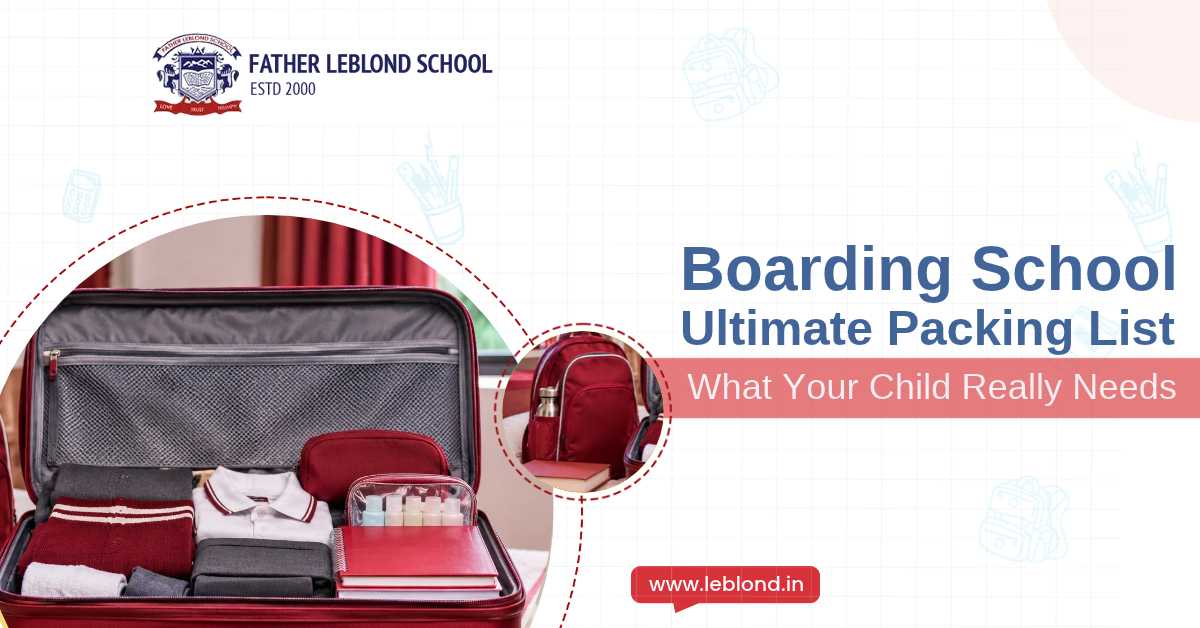

A child's first day at boarding school marks an important change for the entire family. Along with completing admission formalities, parents need to arrange the clothes, study materials, and personal belongings their child will use every day.
A useful boarding school packing list should cover everyday clothing, toiletries, stationery, bedding, personal care products, and other items children may need during their stay. The quantity and type of belongings will depend on the school’s rules, available hostel facilities, and the child’s age.
Some schools provide uniforms, bedding, and study materials, while others ask parents to arrange them separately. Knowing these requirements in advance helps families shop wisely and pack only what their children will actually use.
1. Clothing Essentials for Everyday Use
Children need different clothes for classes, sports, leisure time, and sleeping. Try to ensure they have enough items for their usual routine but not too much in their suitcase. Check the school’s guidelines to see if they have set uniforms and if there are rules around their casual wear.
Items that could be useful are:
-
Uniforms: Make sure your child has enough shirts, trousers, skirts, ties, and other uniform items.
-
Casual wear: Comfortable T-shirts, trousers, jeans, and everyday clothing.
-
Sleepwear: Pack comfortable dresses so that children can sleep well.
-
Undergarments: Carry enough underwear and vests for daily use, along with a few extra sets.
-
Socks: Include school socks, sports socks, and a few additional pairs.
Try to ensure that the clothing is easy to wash and dry. Label your child’s uniform and clothing to avoid any confusion in shared laundry areas.
2. Toiletries and Personal Hygiene Products
Your child will need to learn how to look after their personal hygiene. Provide them with basic toiletries. You should take care that these products are suitable for their skin type and hair type; avoid large bottles.
Items that could be useful are:
-
Toothbrush and toothpaste.
-
Bath soap or body wash
-
Shampoo and conditioner
-
Comb and brush
-
Hair oil
-
Facewash
-
Moisturizer and lip balm
-
Sun cream
-
Bath towels and hand towels
-
Nail cutter
-
Deodorant ( is appropriate for their age)
-
Sanitary products ( girls only)
You can place these products in a separate toiletry bag so your child can find them easily. Choose leak-proof bottles to prevent spills inside the suitcase. It is also helpful to teach children how to use their personal items.
3. Stationery
As your child will be spending a lot of their time at school, they will need stationery to help them with their studies. Provide them with the essentials so they don't have to ask anyone for basics.
Items that could be useful are:
-
Notebooks and notepads
-
Blue and blacks pens
-
Pencils and Erasers
-
Pencil sharpener
-
Ruler and pencil case
-
Highlighters and coloured pens
-
Crayons/ colour pencils ( if required)
-
Glue stick and scissors (if allowed)
-
School bag
-
Folders and files
-
Book covers and labels
-
Sticky notes and bookmarks.
Before you buy anything, you can ask what stationery they require. Some schools provide textbooks, notebooks, and other stationery for their students. Avoid providing duplicate items.
4. Bedding and dormitory essentials
Your child will be staying in their room at the boarding school for the duration of their term. Provide them with a few essentials to help them keep their bed and personal items organised.
Items that could be useful are:
-
Bed sheets
-
Pillow
-
Mattress protector
-
Laundry bag
-
Clothes hangers
-
Small storage boxes
-
Shoe organisation
-
Bedside organisation
Check the required bed size before purchasing bedsheets or mattress covers. Some schools may provide them with their mattress, pillow, and blanket. Others may expect them to bring their own. Always follow the hostel's guidelines to avoid bringing any bulky items.
5 . Personal items that make your child feel at home
Your child may miss their family, home, and familiar surroundings. Providing a few personal items can help them feel more comfortable in their new room.
You can pack:
-
Family photos
-
Favourite storybook
-
Personal dairy
-
Small photo album
-
Favourite soft toy ( if allowed)
-
Wristwatch
-
Reusable water Bottle
-
Small keepsake from home
Let your child carry a few items that they like; it is advisable that you avoid expensive things or delicate belongings that they may lose or damage. A few items from home will help them feel more at ease in their new environment.
6. Health, safety and first aid essentials
You should provide your child with a small first aid box. They should know who to contact if they are feeling unwell.
Things that may be helpful:
-
Prescription medication ( with correct labels)
-
Copy of prescription
-
Medical history ( if required)
-
Emergency contact numbers
-
Health insurance information ( if applicable)
-
Allergies
-
Basic first aid ( if allowed by school)
If your child requires medication, has allergies, or has any health needs, inform the school. Do not provide them with any medication without checking the school guidelines. The staff should be aware of what medications they are taking.
7. Things Parents should avoid packing; (Use Capital L or Small; Not mixed)
If you provide your child with too many items, it can cause issues. They may struggle to organise their cupboards and find their everyday items.
Avoid providing them with:
-
Expensive watch
-
A large amount of money
-
Unnecessary electronics
-
Too many shoes
-
Too much casual clothing
-
Anything sharp
-
Glass items
-
Restricted food
-
Expensive personal items
Every school will have its own guidelines for what its students can bring. Ensure you follow the guidelines and remove any items that are not allowed.
8. Practical packing tips for parents
Once you have ensured you have gathered all the essential things for your child. You can just recheck before departure so that if any unnecessary items or any important things are left, this will help you to prevent any confusion.
Here are some useful tips :
-
Make a list: Write down all the required items and tick them off as you pack.
-
Label personal belongings: Add your child's name to clothes, shoes, bags, and other frequently used items so that they don't get lost.
-
Use separate bags: Keep toiletries, stationery, clothing, and footwear in different compartments.
-
Pack according to the weather: Check the local weather and provide them with appropriate clothing.
-
Documents: Keep their admission information, medical history, and emergency contacts in a separate folder.
-
Don't overpack: Provide them with enough clothing and personal items for their school routine.
-
Check the school guidance: Confirm which items the school provides and which ones students must bring.
These are some small steps that can help children manage their belongings and adjust to their new daily routine.
Final Thought
When you are preparing your child for boarding school, you should help them get used to managing their essential things by themself. You can also make an organised boarding school packing list, which will help you remember the essentials while giving children a chance to learn how to manage their own things. Building these habits early fosters independence and eases the adjustment to living away from family.
Before you complete the entire packing, you must check the school’s instructions to understand what your child needs and what the hostel already provides.
A supportive environment allows these newfound habits to transform into lifelong skills. Families who want to see how a structured daily schedule shapes character can explore the campus environment and student lifestyle at Father Lebold School.
FAQs:
1. What essential items should parents pack for a child going to boarding school?
Packing should include uniforms, casual clothes, underwear, toiletries, stationery, bed linen, and personal hygiene items. Prescribed medications, important paperwork, and a few personal items should also be included.
2. How much clothing should be packed?
The amount of clothing will depend on how often they will have laundry at the school and the uniform policies. Pack enough uniforms, casual clothes, socks, and underwear. Include a few extra sets just in case.
3. What should students pack?
Students should include a toothbrush, toothpaste, shampoo, soap, face wash, hairbrush, towels, moisturizer, and any other hygiene items. It is a good idea to include a toiletry bag.
4. Should parents pack items?
Yes, clothes, shoes, bags, stationery, and personal items should all have your child's name on them. Often students will share their rooms together, so having your items labelled makes it easier to identify them.
5. What personal items can children take?
Children can take photos of their family, a favourite book, a personal diary, a small trinket, or a comforting soft toy ( if allowed). This will make them feel more comfortable in their new environment, especially during the first few weeks.
6. What should parents check?
Check what the school recommends to pack. This way, you will know what they will provide. Check what uniform they will require, bed linen, rules around electronic devices, what medication they can take, and what personal items they cannot take.